About Us
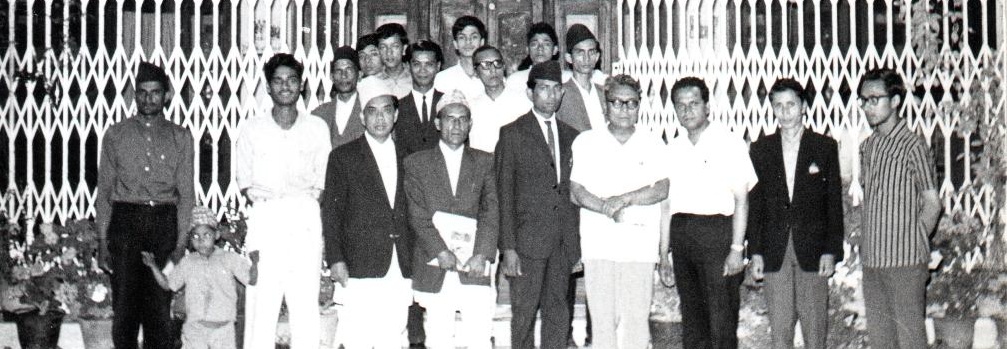
A seminal moment in Nepali philately: Philatelists pose in front of the Department of Mines and Geology in Kathmandu, the venue for Nepal’s First National Philatelic Exhibition in June 1966. A collective effort by a small, dedicated group of philatelic enthusiasts, spanning more than four years, culminated in the establishment of the Nepal Philatelic Society on July 10, 1966. Among those identifiable here are Society’s founding members Nanda Govinda Rajkarnikar, Hom Bahadur KC, Shiva Raj Malla and Upendra Jung Rana with the chief of Nepal Philatelic Bureau, Govindananda Rijal. They are joined by senior philatelist Bijaya Raj Singh, Surendra Lal Shrestha, Hira Singh Gurung, Indian stamp dealer Sukumar Mondal and others. Photos: NPS Archives
Connecting Generations Through Philately
The Nepal Philatelic Society is a non-profit organisation founded in 1966 to advance philately and related pursuits in Nepal. For six decades, it has brought together collectors, researchers, and enthusiasts committed to the study and preservation of the nation’s postal heritage.
From the outset, it pursued an ambitious mandate. It has mounted numerous philatelic exhibitions, supported research and publication, and promoted youth engagement. Internationally, the Society has represented Nepal for over fifty years, showcasing Nepali philately at major global exhibitions under the auspices of FIP, the world governing body of philately, and FIAP, its regional federation for Asia.
The Society currently counts 205 active members, including 179 with life memberships.
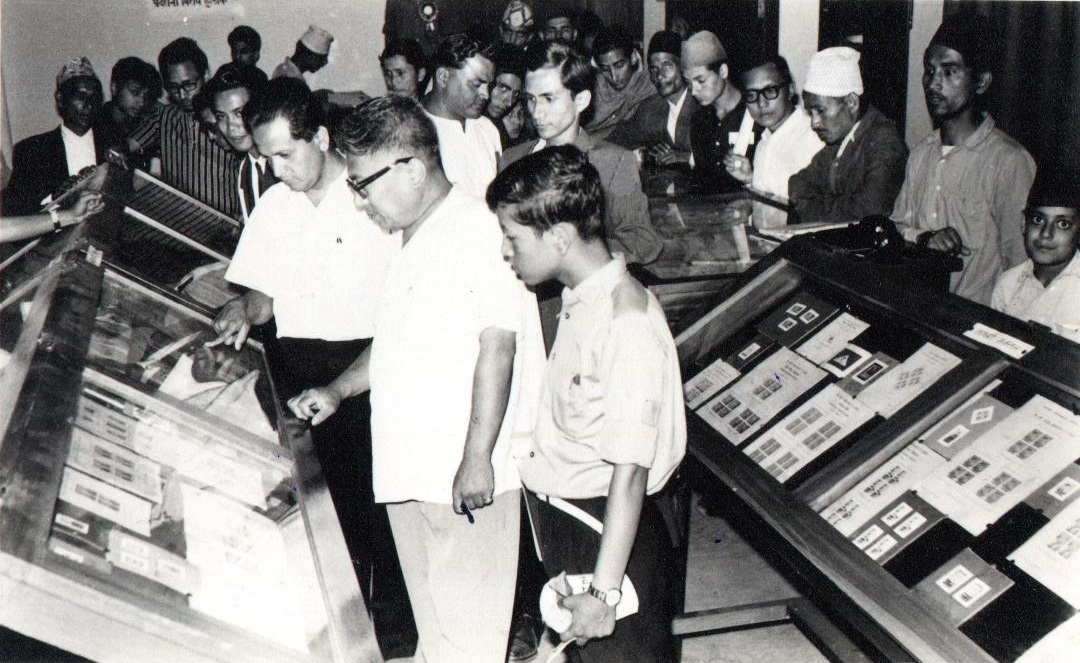
Senior philatelist Bijaya Raj Singh (second from right, centre) examines the exhibit of Nanda Govinda Rajkarnikar (third from right) during the inaugural National Philatelic Exhibition in Kathmandu, held from June 10–16, 1966. Also pictured are Shiva Raj Malla (fourth from right), Surendra Lal Shrestha (centre), and Swoyambhu Lal Shrestha (centre left, in white shirt).
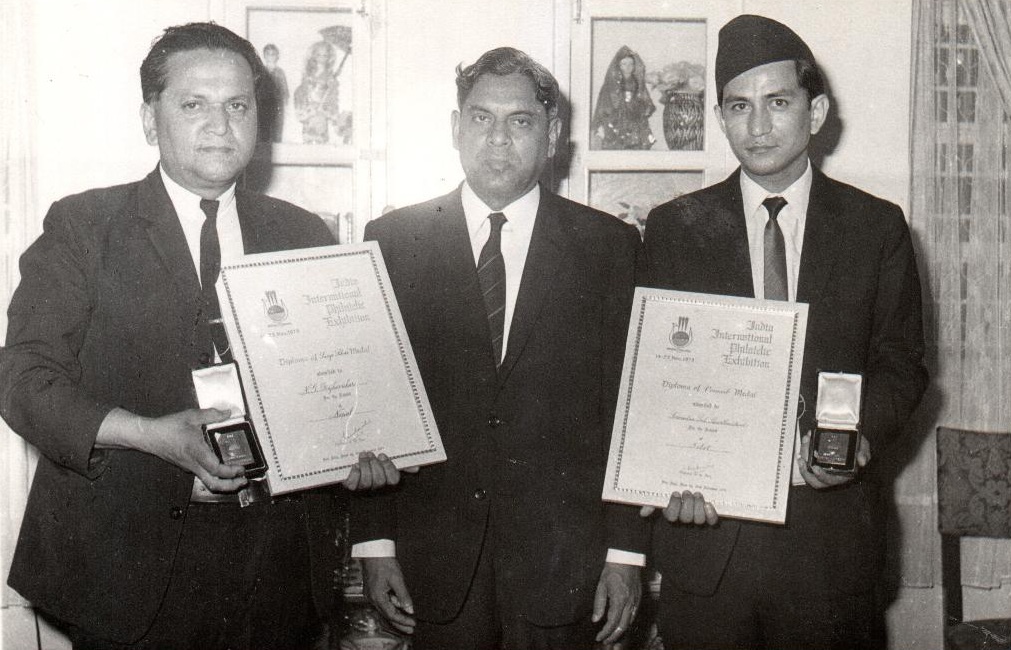
Nepal Philatelic Society members Nanda Govinda Rajkarnikar (left) and Surendra Lal Shrestha with an Indian Embassy official in Kathmandu, displaying the medals and certificates they won at INDIPEX ’73 in New Delhi. The exhibition, held from November 14 to 23 in 1973, was the first international participation for Nepali philatelists.
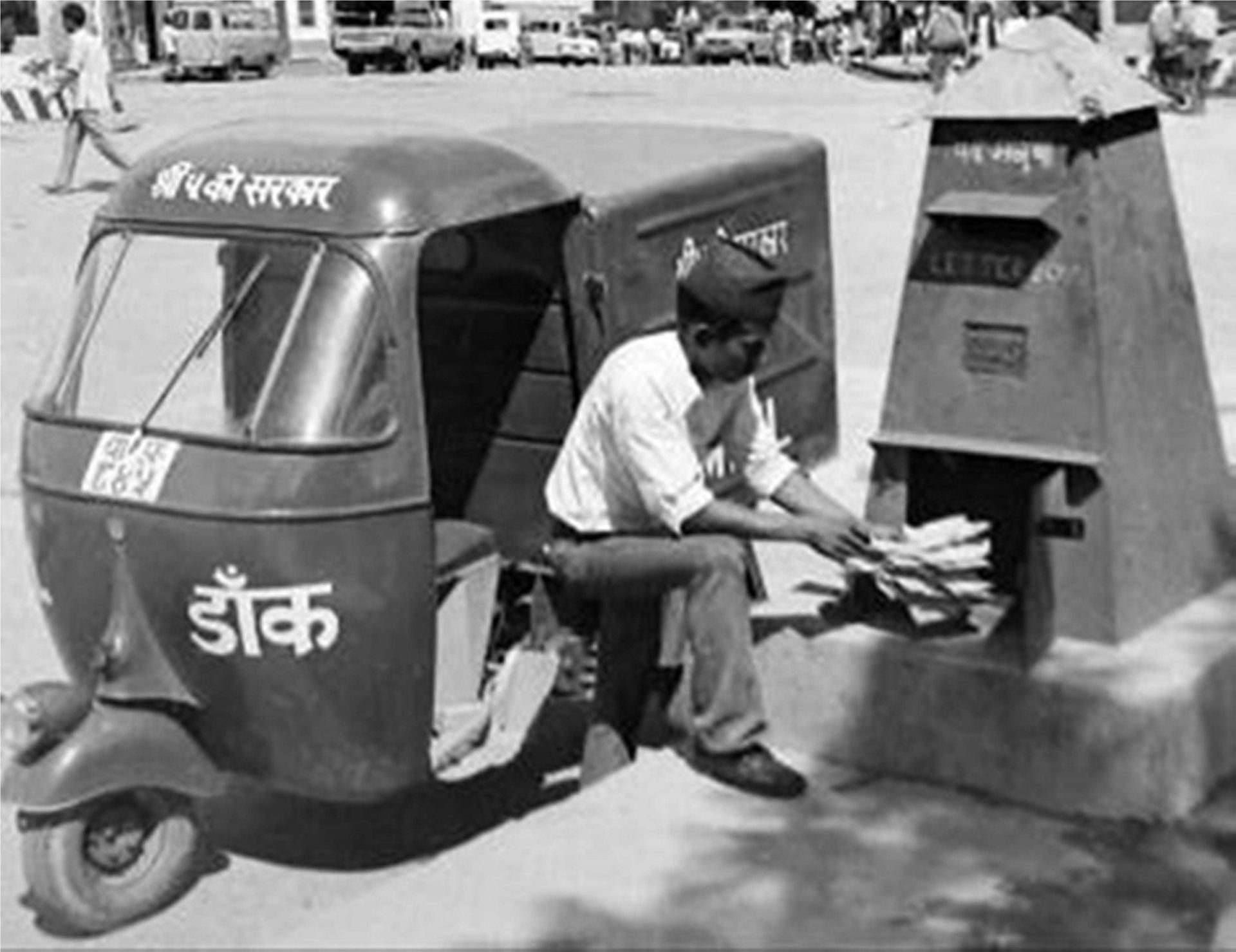
A MID-20TH-CENTURY SCENE IN KATHMANDU: A postal worker on a three-wheeled vehicle marked ‘डाँक’ (Post) collects letters from a roadside mailbox.
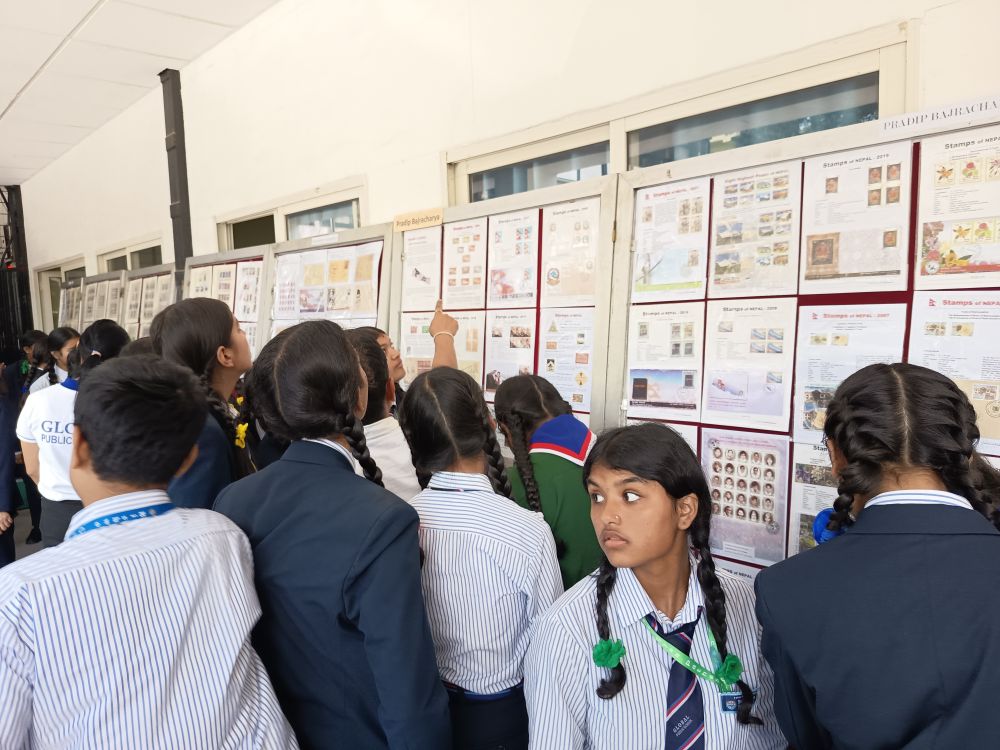
Schoolchildren visit an exhibition organised by the Nepal Philatelic Society to mark the Democracy Day on the Department of Postal Services premises in Kathmandu, 2025.
From Traditional to Digital
Changing technologies and communication practices have reshaped the world, not least the field of philately. Traditional mail has declined sharply. As encounters with stamps and postal materials become less frequent, the cultural, historical, and artistic stories they carry risk fading from public view.
In response, the Society has reaffirmed preservation as its core mission while expanding its scope to meet contemporary needs. A growing sense of urgency has placed new emphasis on outreach, particularly to younger audiences. So, a durable digital presence is no longer optional—it is essential.
By taking decades of specialist knowledge online, the Society is improving access to research and resources, widening participation, and strengthening ties with collectors and institutions both at home and abroad. In doing so, it ensures that philately continues to educate, inspire, and connect present and future generations to the country’s rich cultural history.
The Nepal Philatelic Society is a non-profit organisation founded in 1966 to advance philately and related pursuits in Nepal. For six decades, it has brought together collectors, researchers, and enthusiasts committed to the study and preservation of the nation’s postal heritage.

From the outset, it pursued an ambitious mandate. It has mounted numerous philatelic exhibitions, supported research and publication, and promoted youth engagement. Internationally, the Society has represented Nepal for over fifty years, showcasing Nepali philately at major global exhibitions under the auspices of FIP, the world governing body of philately, and FIAP, its regional federation for Asia.

The Society currently counts 205 active members, including 179 with life memberships.
Changing technologies and communication practices have reshaped the world, not least the field of philately. Traditional mail has declined sharply. As encounters with stamps and postal materials become less frequent, the cultural, historical, and artistic stories they carry risk fading from public view.

In response, the Society has reaffirmed preservation as its core mission while expanding its scope to meet contemporary needs. A growing sense of urgency has placed new emphasis on outreach, particularly to younger audiences, to ensure continuity of interest and knowledge across generations. In this context, a durable digital presence is no longer optional—it is essential.

By taking decades of specialist knowledge online, the Society is improving access to research and resources, widening participation, and strengthening ties with collectors and institutions both at home and abroad. In doing so, it ensures that philately continues to educate, inspire, and connect present and future generations to the country’s rich cultural history.