
KATHMANDU: For generations, Nepal’s postal service was synonymous with communication. It carried handwritten letters across mountains, connected villages to district headquarters and served as one of the state’s most visible institutions.
Today, that role has largely faded as digital communication and private logistics have taken over. In response, the government is not abandoning the postal network. It is seeking to repurpose it as core infrastructure for public service delivery.
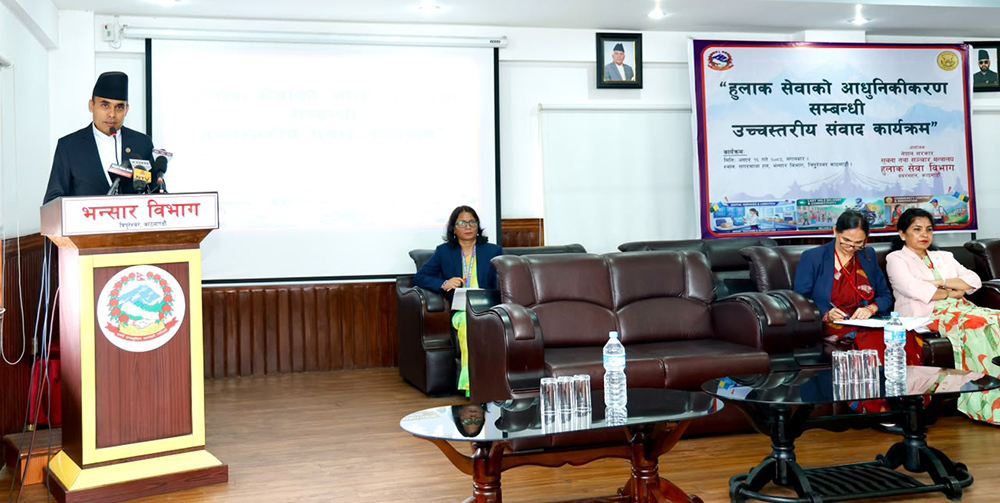
That vision took centre stage at Tuesday’s “High-Level Dialogue on the Modernisation of Postal Services”, organised by the Department of Postal Services. During the day-long event, officials outlined plans to transform the postal system into a nationwide government courier. It would deliver passports, driving licences, academic certificates, and other official documents directly to citizens’ homes.
Opening the discussion, Minister for Communications and Information Technology Bikram Timilsina said the government is implementing a strategic plan to revitalise the postal service.
He said digital technology has changed the environment, but not reduced the importance of postal services. He stressed the need to modernise the system into a “technology-friendly and specialised government courier service”.

Noting that the reform is already showing results, the minister described it as part of a broader effort to revive the institution. He also linked the initiative to governance reform. Home delivery of documents, he said, reduces citizens’ time, costs, and administrative burden. It also strengthens trust in public services.
Timilsina’s remarks pointed to a deeper policy shift. The postal network is no longer seen mainly as a communication system. It is being reimagined as a national delivery infrastructure for government services. But he also acknowledged constraints. The government cannot deliver everything alone, he said. Public-private partnerships will be essential.
He added that institutional change is critical. “The post must change itself and deliver services differently,” Minister Timilsena said. Reform, he noted, depends on internal will as much as policy direction.
That institutional direction is already taking shape on the administrative side.
Secretary at the Ministry of Communications and Information Technology Laxmi Kumari Basnet said the need for postal services remains strong, even in the digital age.
She confirmed that agreements have been signed with seven government agencies. These allow key documents to be delivered through the Government Courier Service.
Passports, driving licences, educational certificates, and health reports are already being delivered to households, she said. The next step is to make the service more effective, professional, and citizen-friendly.
At the implementation level, Director General at the Department of Postal Services Manmaya Bhattarai Pangeni placed the reform in a global context.
The director general said Nepal is adopting international best practices as part of its modernisation drive. The campaign is guided by the slogan “Post in Every Home, Post in Every Heart.”
She added that early feedback has been positive. Citizens receiving official documents at home are responding well, suggesting growing confidence in the system.
The reform is also anchored in government policy. The 100-day reform agenda and subsequent budget statements have committed to home delivery of official documents. They also aim to convert post offices into “Smart Post Offices.”
The logic is straightforward. Citizens often make repeated trips to government offices for basic documents. This is especially difficult outside major cities. Home delivery could reduce both cost and time.
But implementation will be demanding.
A secure government courier system requires tracking systems, trained staff, and reliable delivery standards. It must work across Nepal’s difficult geography. It also competes with private courier firms that already operate on speed and efficiency.
For now, the postal service is being repositioned as more than an ageing communication system. It is being rebuilt as a tool of governance. Whether it succeeds will depend less on ambition and more on execution.