BHAKTAPUR: Late morning Wednesday, the pigeons began their slow, ceremonial circles above Bhaktapur Durbar Square.
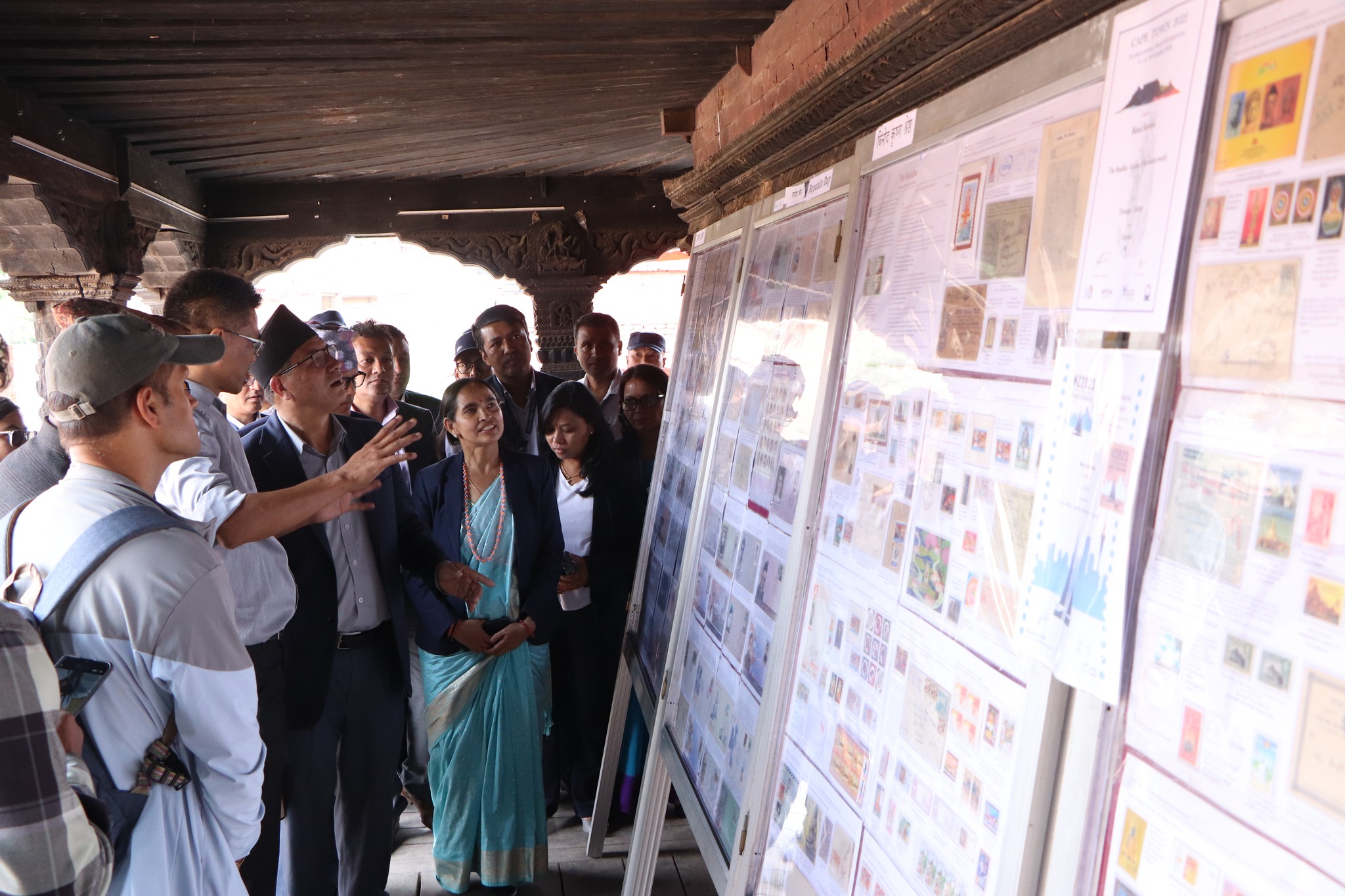
Beneath the carved wooden windows and brick facades of the old royal square, a group of men leaned carefully over display frames, studying postage stamps no larger than thumbnails.
One elderly visitor adjusted his spectacles and pointed excitedly at an old commemorative issue. Nearby, a schoolboy stared at a stamp carrying the image of Sagarmatha, as though discovering for the first time that a country could place its pride, history and longing onto a tiny square of paper.
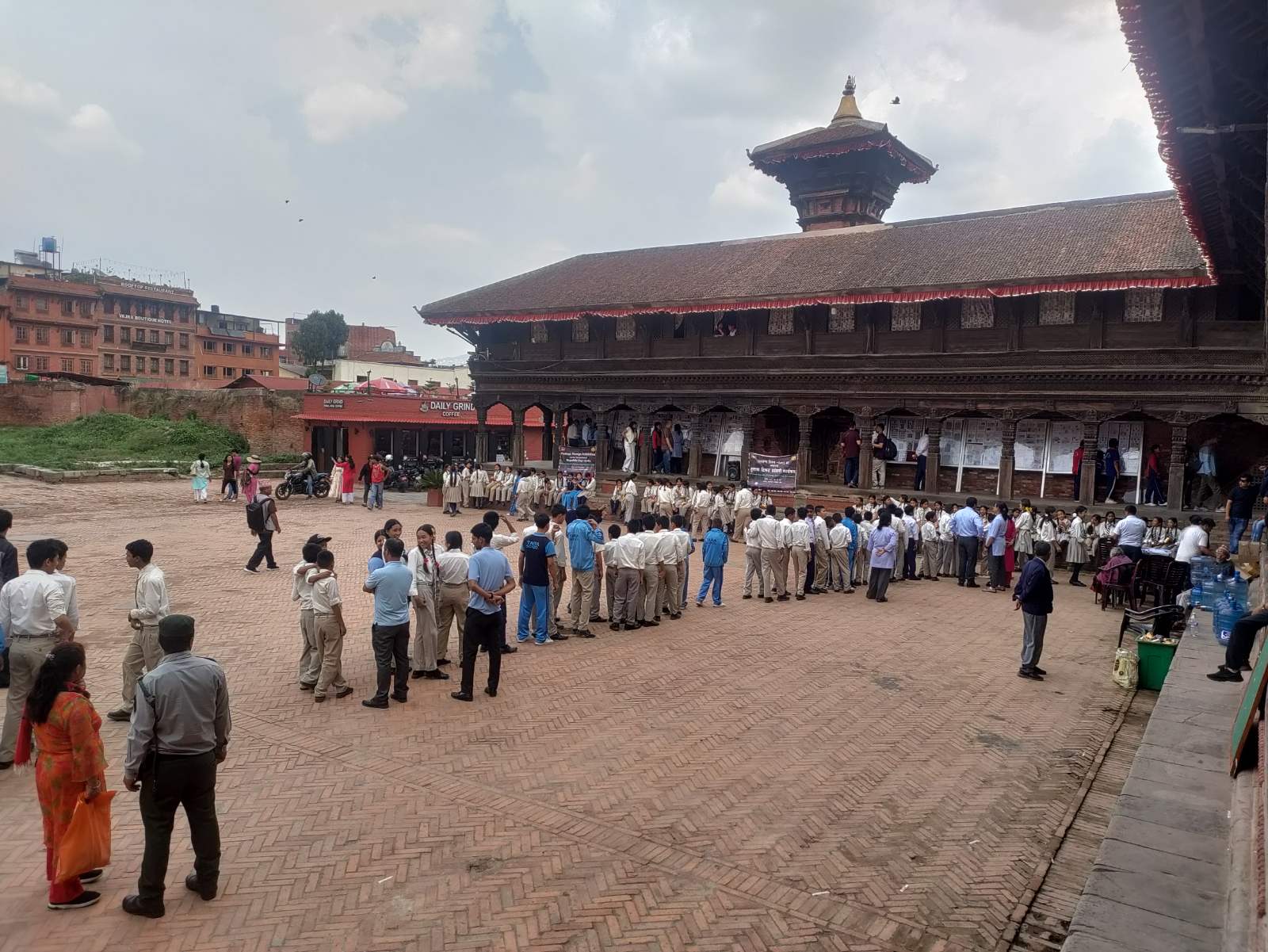
This was the Republic Day Philatelic Exhibition–2083, jointly organised by Nepal’s Department of Postal Services and the Nepal Philatelic Society at Bhaktapur Durbar Square. At first glance, it appeared a gathering that was modest and almost old-fashioned in an era ruled by instant messages and disappearing digital notifications. But as the crowds thickened through the day, the exhibition began to feel less like a hobbyists’ convention and more like a meditation on memory itself.
The venue mattered. Bhaktapur Durbar Square is a place where Nepal’s past refuses to disappear quietly. The red-brick palaces, pagoda roofs and centuries-old courtyards carry the weight of dynasties, earthquakes and political change. Against that backdrop, the stamp exhibition seemed unusually fitting. The square preserves history in wood and stone; the stamps preserve it in ink and paper.
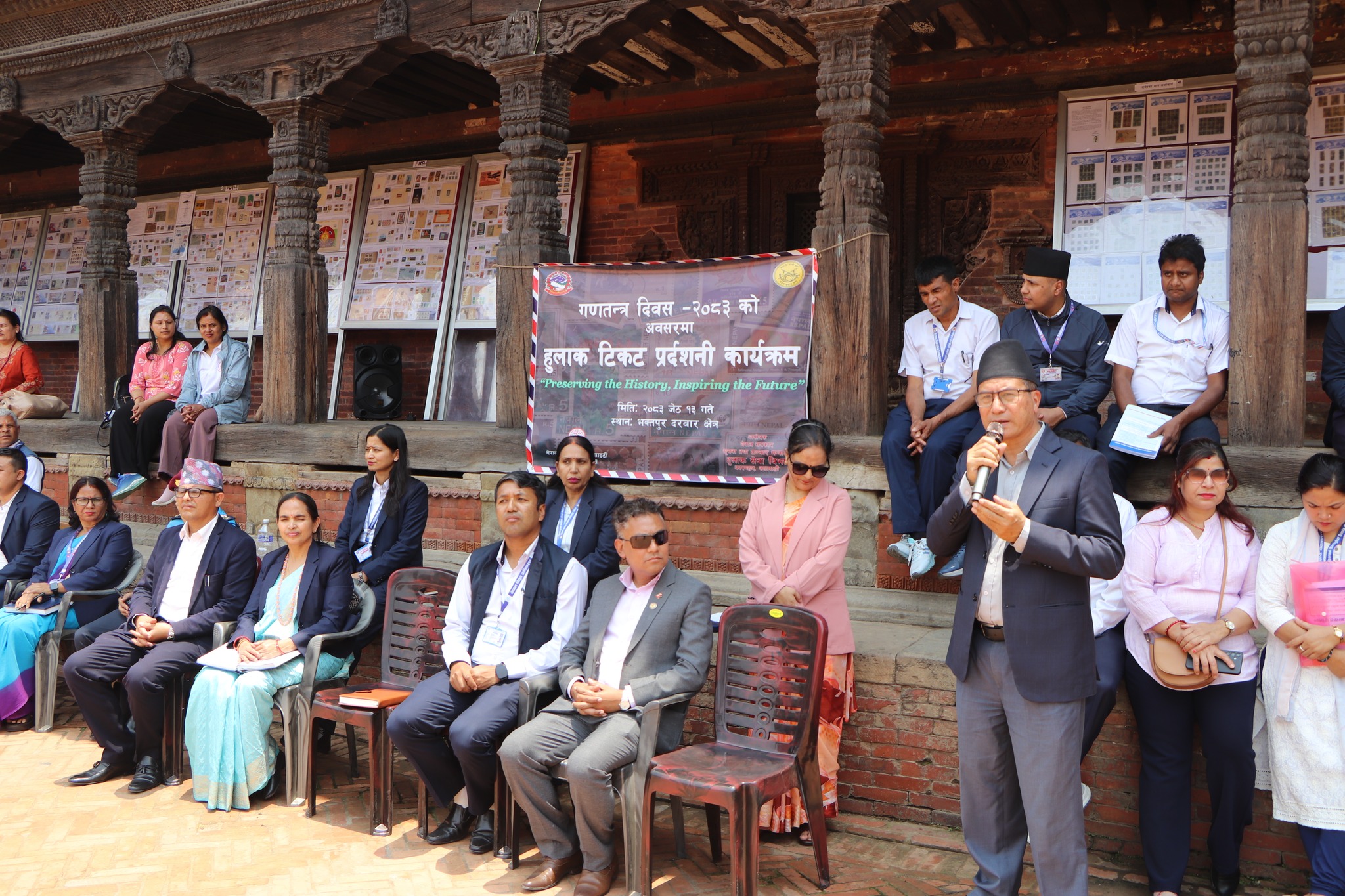
Mayor Sunil Prajapati inaugurated the exhibition earlier in the day, describing postage stamps as an important part of national heritage and stressing the need to pass on their significance to younger generations. “Stamps reflect the country’s history, culture, art and identity,” he said before touring the displays.
Chief District Officer Binod Kumar Khadka highlighted the importance of preserving public memory and recognising the historical value of postal heritage. Director General of the Department of Postal Services Manmaya Bhattarai Pangeni and Nepal Philatelic Society President Chandra Rabi Shrestha underscored philately’s role in safeguarding national heritage, while acknowledging the challenge of sustaining public interest in an increasingly digital age.
Yet the exhibition carried little sense of defensiveness. It was not an attempt to compete with technology. Instead, it offered a different rhythm—one that invited visitors to slow down, reflect and engage with history through stamps, stories and shared memories.
Away from the formal speeches, the exhibition revealed quieter, more intimate stories.
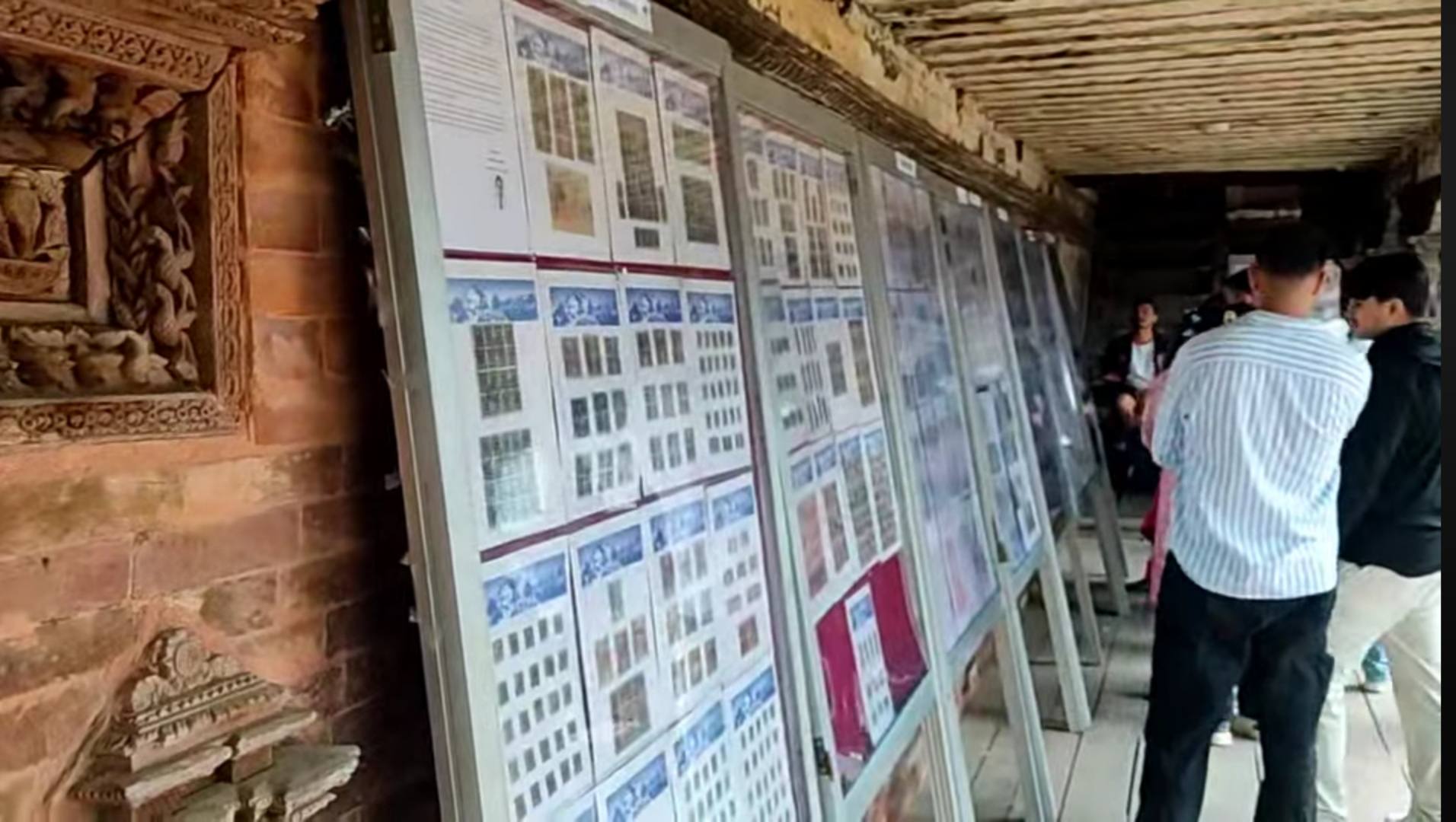
The exhibition featured rare and vintage issues alongside commemorative first-day covers celebrating Nepal’s mountains, wildlife, festivals, democratic movements and national figures. Tiny portraits of kings, athletes and revolutionaries sat side by side inside illuminated frames.
Each stamp neatly displayed inside 23 frames carried a memory: a political movement, the life cycle of the Buddha, early issues of Nepali stamps, aerogrammes, a sporting victory, and an extinct postal route. He recalled how, as a child, letters arriving from abroad were treasured not for the contents inside but for the foreign stamps affixed outside.
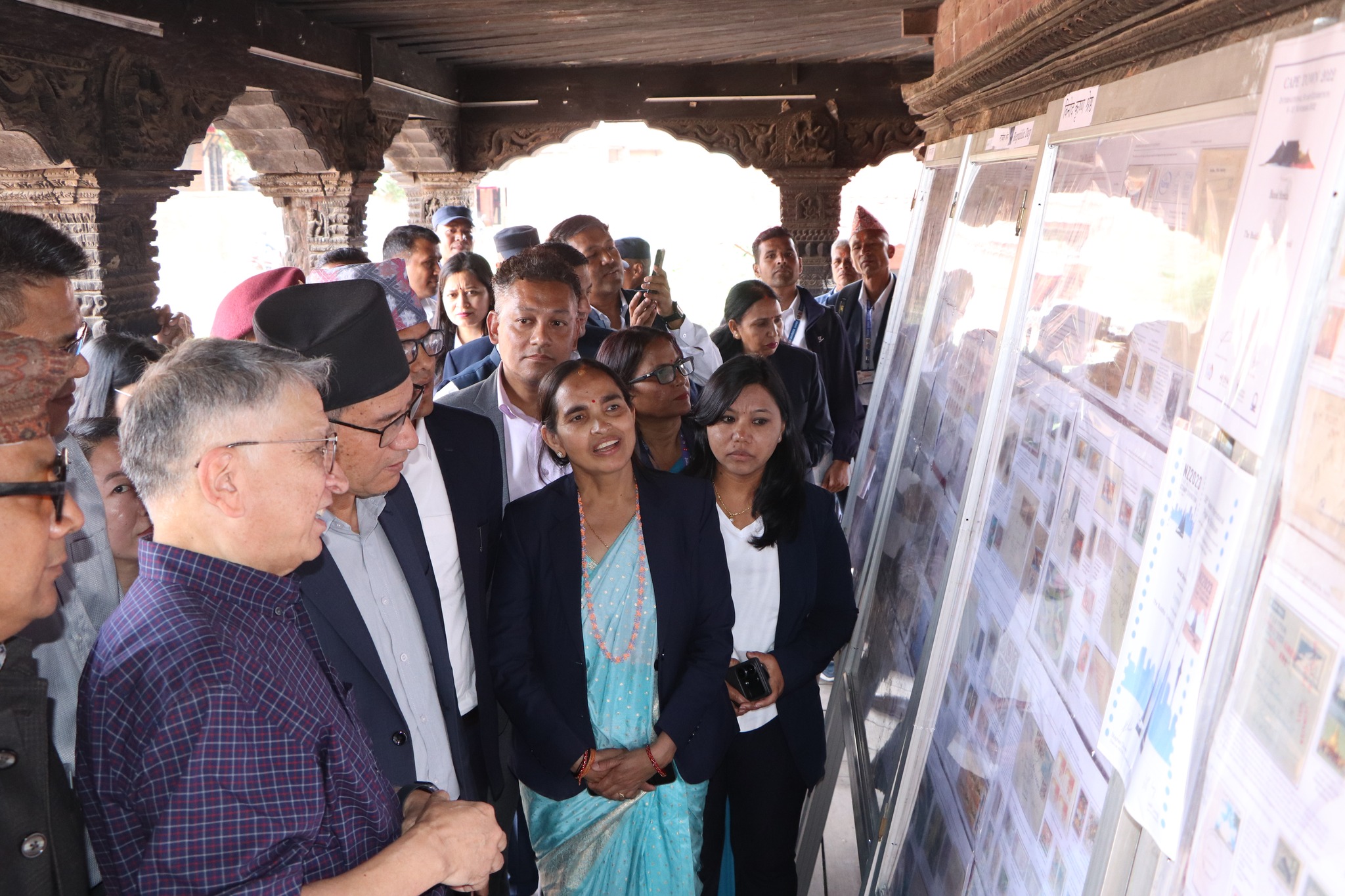
Philatelist Binod Krishna Shrestha’s The Buddha: The Genius of the Ancient World emerged as the standout exhibit of the show. The thematic collection chronicles the life of the Buddha and traces the global spread of Buddhism. It has earned significant international recognition, winning two Vermeil medals and three Large Silver medals.
Children moved quickly past the older collections but paused at stamps featuring tigers, rhinos and mountains. Older visitors lingered longest before the displays documenting Nepal’s political transitions.
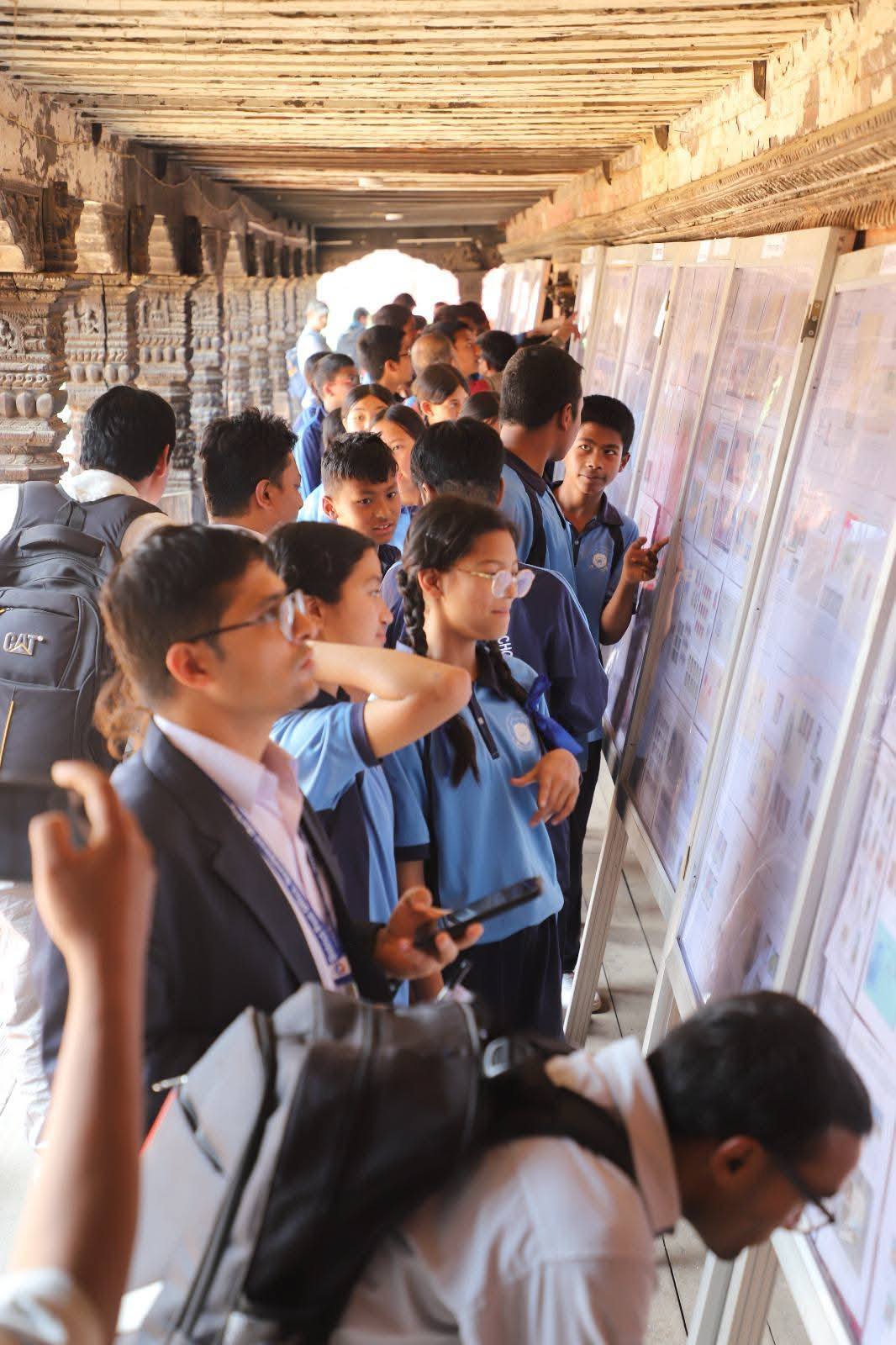 At another corner of the exhibition, volunteers from the Nepal Philatelic Society explained the art of collecting to curious students who had never mailed a handwritten letter in their lives. For many younger visitors, stamps belonged to the same fading world as fountain pens and postcards. Yet the exhibition suggested that philately survives precisely because it resists speed.
The stamps seemed to compress entire eras into miniature frames: revolutions reduced to portraits, mountains to engravings, national grief to monochrome memorial issues. Some commemorated triumphs. Others preserved losses. Together, they formed an unofficial archive of Nepal itself — not through grand monuments or textbooks, but through objects once licked, posted and carried by hand across impossible distances.
By evening, as the crowds began thinning and the shadows lengthened across Bhaktapur Durbar Square, a final group of visitors remained gathered around the rare collections. An old man carefully explained postal cancellations to a young girl who listened with surprising patience.
For a moment, the exhibition no longer seemed concerned merely with stamps. It was about what a society chooses to remember and how.