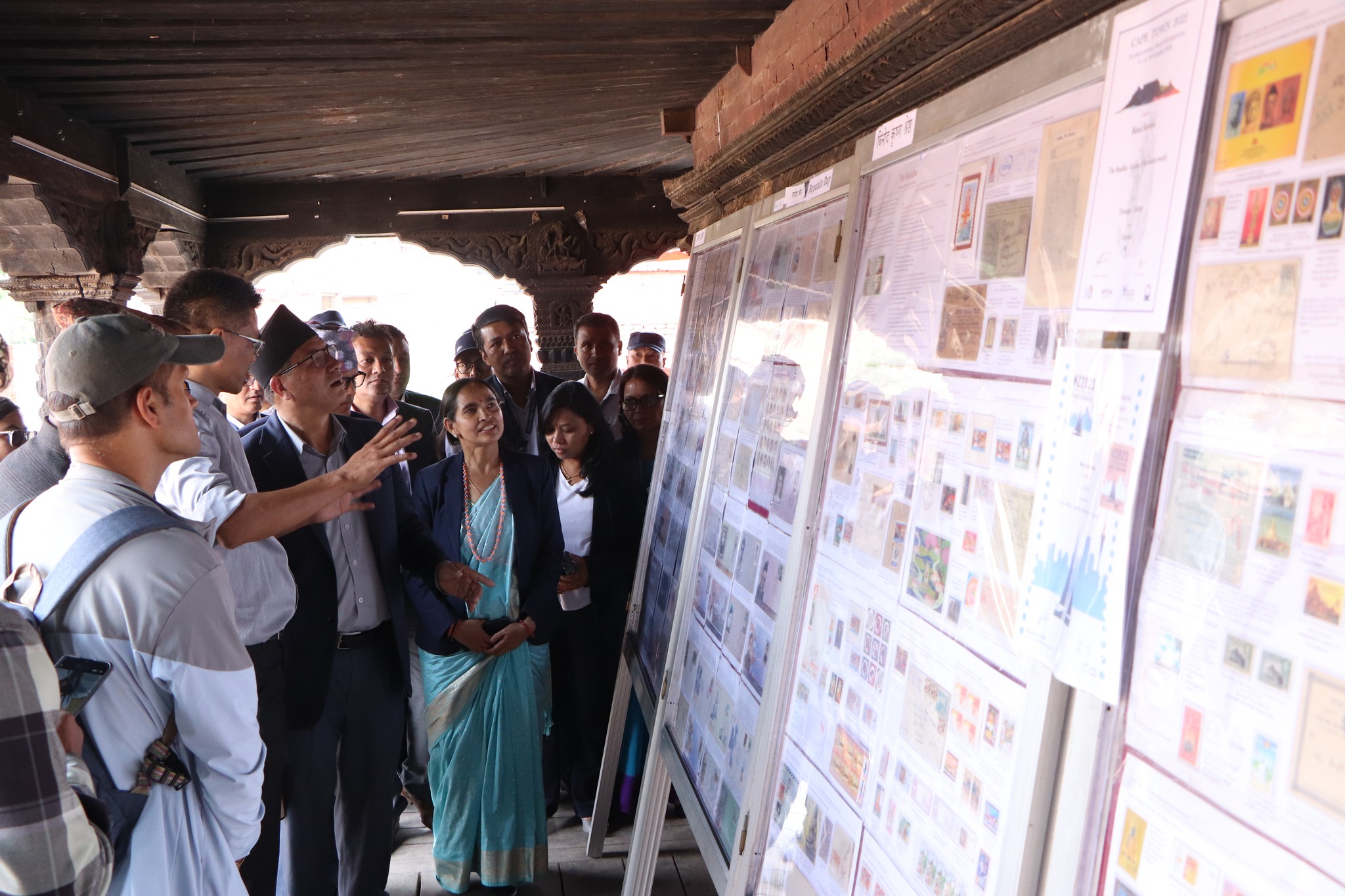
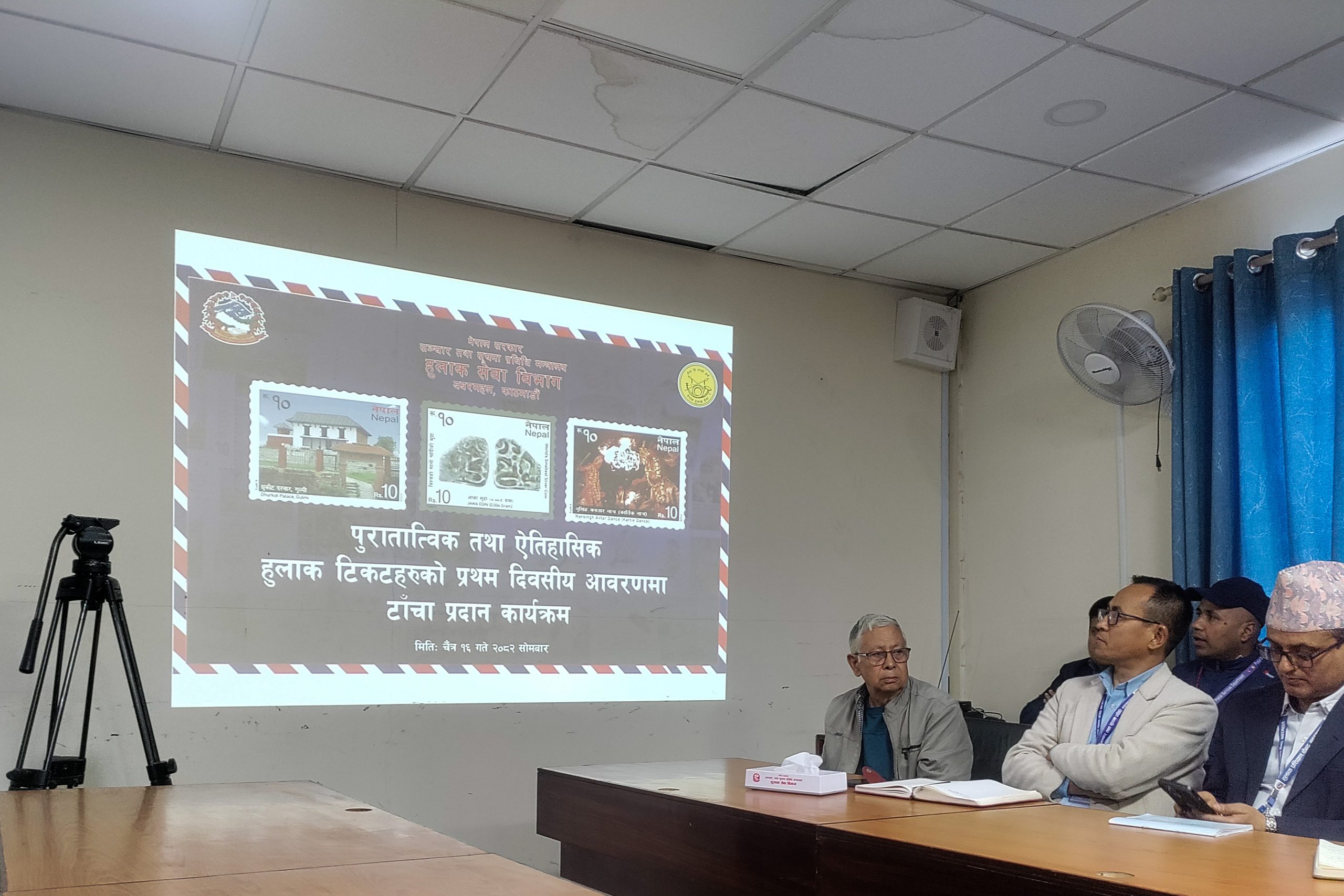
KATHMANDU: The Department of Postal Services on Monday released a new series of commemorative postage stamps celebrating Nepal’s rich historical and cultural heritage. The three Rs10 stamps highlight iconic symbols of the nation’s past: Jawa Dam, Dhurkot Durbar, and the culturally rich Nrisingha Avatar Dance (Kartik Naach).
Newly appointed Minister for Communication and Information Technology, Dr. Bikram Timilsina, unveiled the stamps, applying first-day cancellations during a ceremony at the department. He highlighted postage stamps as custodians of national identity: “Stamps are more than just tools for mail—they are storytellers of our history, culture, and values,” he said, stressing the need to modernise postal services to connect citizens across the country.
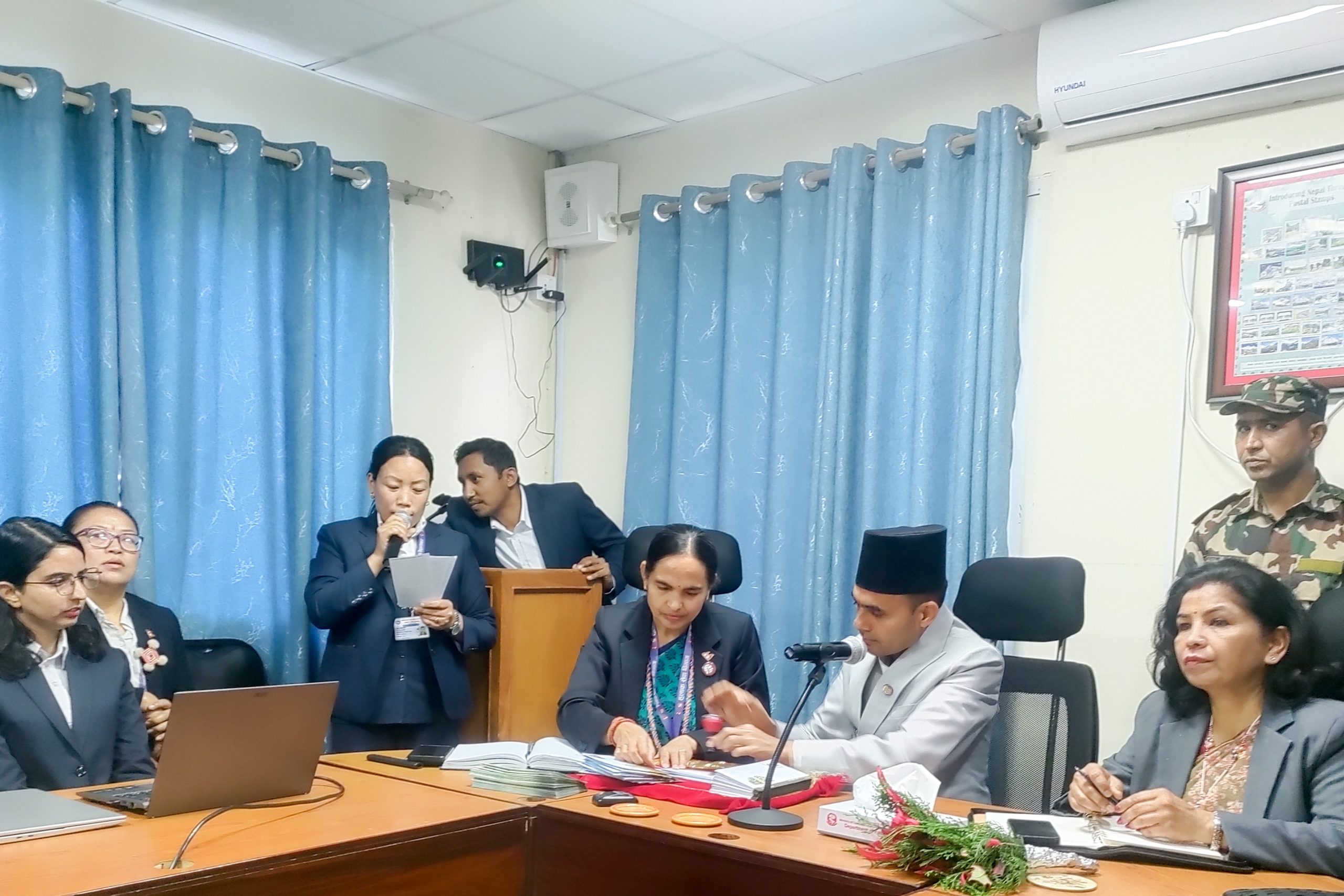
Speaking on the occasion, Laxmi Kumari Basnet, secretary at the ministry, noted that such initiatives preserve and promote Nepal’s archaeological and historical heritage internationally.
Director General of the Department of Postal Services, Manmaya Bhattarai Pangeni, described stamps as “silent ambassadors” of the nation and emphasised the department’s commitment to showcasing Nepal’s unique cultural and historical identity.
The Jawa coin, a miniature silver currency from the Malla period, is widely regarded as one of the world’s smallest coins. First issued under King Jaya Prakash Malla, the coin measured just 2 mm by 2 mm and weighed as little as 0.01 grams, with smaller fractions produced by cutting it. Historians note that the Jawa offers rare insights into Nepal’s past economies, trade systems, and cultural life, making it a lasting symbol of Nepali identity.
Another stamp features Dhurkot Palace in Gulmi, once the seat of the Dhurkot Kingdom within the Chaubisi confederation. Established around 1465 B.S. and incorporated into unified Nepal in 1843 BS; the palace remains a centre of religious devotion and local traditions, including the Karkha Bhaka folk narrative inspired by Princess Sarumairani. The stamp highlights its historical, cultural, and archaeological significance while promoting tourism.
The third stamp celebrates the Nrisinha Avtar Nach, a centuries-old dance-drama performed every year at Kartik Dabali in Patan Durbar Square, popularly known as Kartik Nach. Introduced in 1697 B.S. by Malla King Siddhinarsingh to mark the completion of the Lord Krishna temple, it is recognised as one of the world’s longest-running theatrical traditions. The performance enacts the story of Lord Vishnu, the demon Hiranyakashipu, his son Prahlad, and other divine figures.
The event brought together senior officials, philatelic enthusiasts, media personnel, and communication professionals. In addition to the stamp release, the department formally welcomed the newly appointed minister and presented an overview of its ongoing programmes and future initiatives.