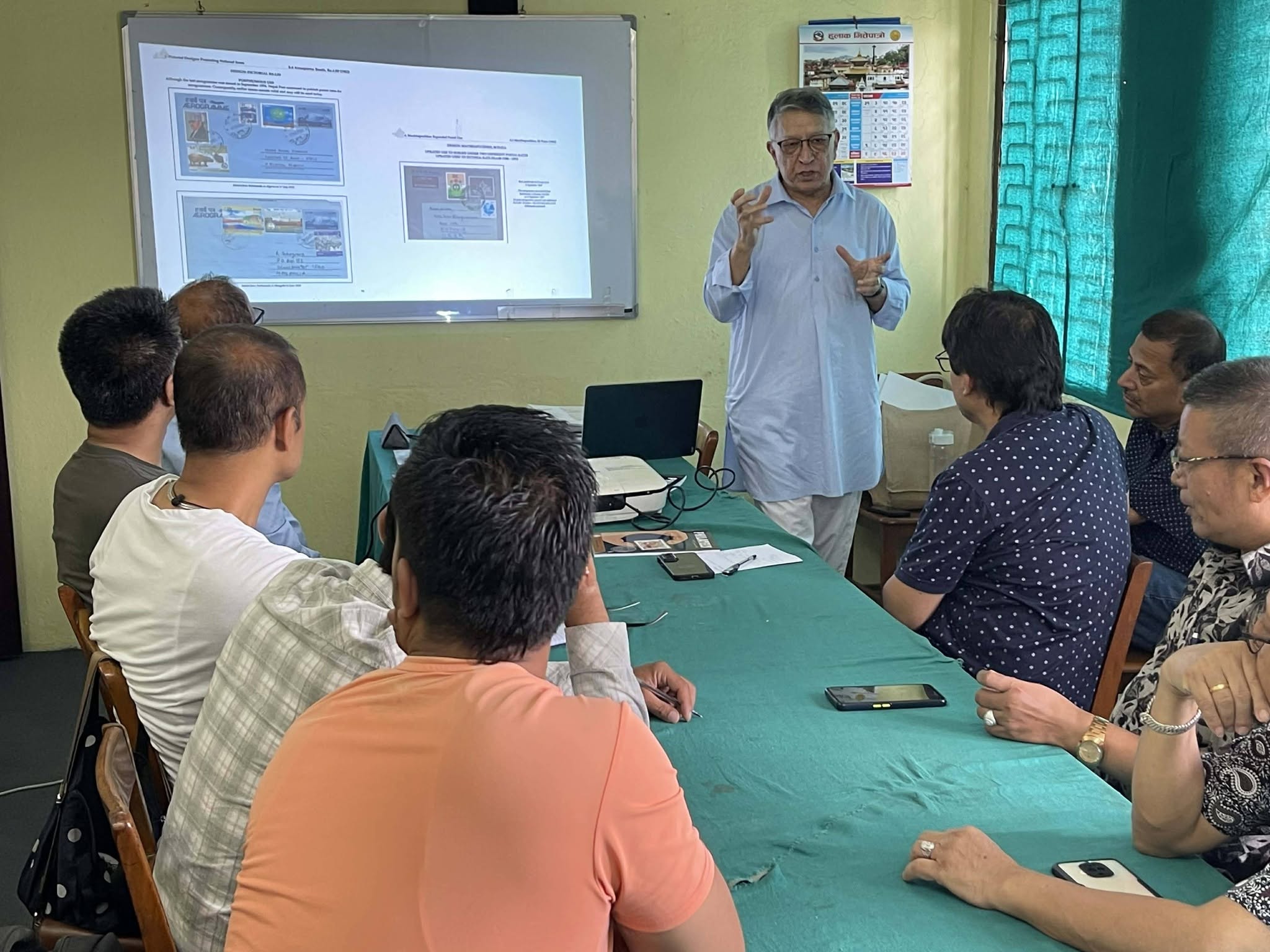
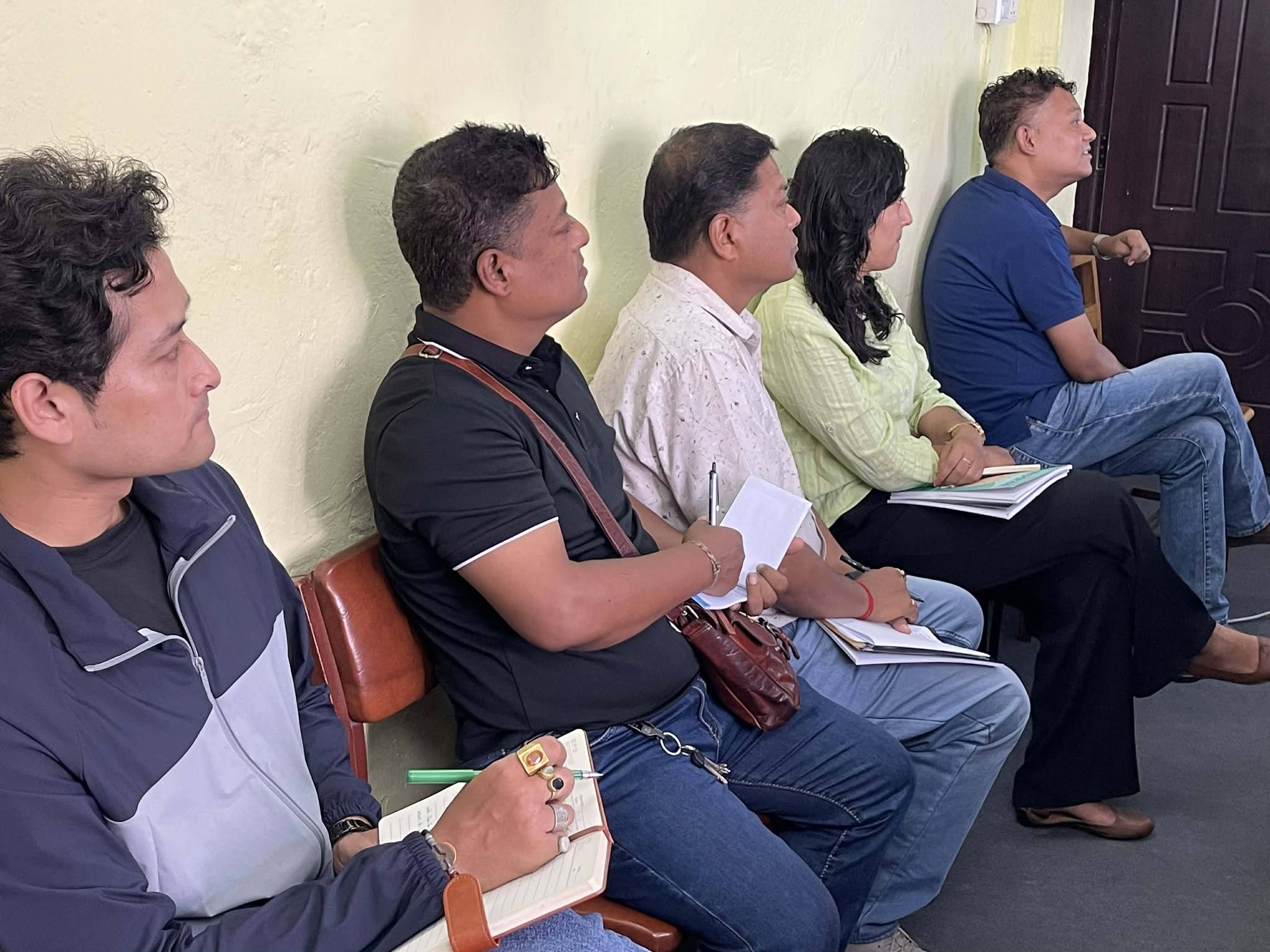
KATHMANDU: It was a rainy Sunday afternoon in Kathmandu, but the steady showers did little to keep away more than 20 stamp collectors eager to explore a specialised corner of philately.
They had gathered for a long-awaited training programme by the Nepal Philatelic Society focused on aerogrammes, a lesser-explored but rewarding area of postal history. The two-hour session was conducted by senior philatelist Binod Krishna Shrestha, whose collections have won multiple medals at major international philatelic exhibitions.
Drawing on years of research and exhibiting experience, Shrestha guided collectors and postal history enthusiasts through the evolution, significance and preservation of Nepal’s aerogrammes.
Tracing the history of aerogrammes in Nepal, Shrestha explained how the lightweight postal stationery developed alongside the country’s communication system and became an important record of social, cultural and postal history.
Participants learned about Nepal’s aerogramme issues, printing varieties, postal usage, rates, cancellations, and ways to identify genuine, commercially used examples. The session also highlighted the importance of preserving postal stationery as documentary evidence of changing communication patterns.

“Aerogrammes are much more than folded sheets of paper. They tell stories of people, postal systems and historical periods. Every genuinely used item carries evidence that enriches our understanding of Nepal’s postal heritage,” Shrestha told participants.
Nepal introduced aerogrammes in 1959 to mark the country’s admission to the Universal Postal Union (UPU). Initially designed for domestic use, they soon became a preferred means of overseas correspondence because they were lightweight, affordable and practical. Nepal issued its final official aerogramme in 1994.
Today, these postal artefacts provide valuable insights into migration, trade, personal communication and the social changes that shaped different periods of Nepal’s history.
Beyond collecting, the session explored the art of building competitive philatelic exhibits. Shrestha shared guidance on research, organisation, presentation and storytelling—key elements in preparing collections for exhibitions recognised by the Fédération Internationale de Philatélie (FIP).
He also cautioned collectors against chasing quantity over knowledge.
“Don’t try to acquire everything at once. Start modestly, study the material you have, and let your collection grow with your knowledge. A carefully researched collection built over time is far more rewarding than a large accumulation assembled in haste,” he said.
Shrestha’s latest international recognition came at the Macao 2026 Specialized World Stamp Exhibition. He won a Vermeil medal for his exhibit “Nepal Postal Stationery: The Design Evolution of Nepal’s Aerogrammes (1959–1994).”
According to Shrestha, the strength of a collection lies not in the number of items gathered but in the depth of understanding behind each piece. He encouraged collectors to study postal routes, rates and historical contexts, noting that research often adds more value than rarity alone.
The interactive session saw collectors exchange observations, discuss rare items and seek advice on authentication, conservation and sourcing postal stationery.

For collector Dipesh Pokharel, the programme was worth rearranging his travel plans. “I actually advanced my visit to Kathmandu by a couple of days so I wouldn’t miss this training,” he said. “Programmes like this teach us not only what to collect but also how to research, organise and present collections to international standards.”
Another beginner collector, Rajesh Shrestha, said the session challenged the idea that specialised philately was only for those with rare or expensive collections. Such initiatives are crucial in helping collectors move beyond simply accumulating stamps to developing well-researched exhibits, he added. “I realised that you do not need a huge collection to begin. What matters is learning how to study and present what you have.”
The discussions reflected growing interest in specialised philately beyond traditional stamp collecting and highlighted the importance of passing knowledge between generations.

Senior collectors and Nepal Philatelic Society advisers Sagar Man Shrestha and Rameshwar Man Karmacharya said the hobby had changed significantly since they began collecting.
“Like every other aspect of life, philately has evolved,” said Sagar Man Shrestha, who is also a former president of the Society. “Our generation collected in a different environment. Today, information is much more accessible, and we should encourage collectors to make use of it.”
Karmacharya stressed the need for experienced collectors to mentor newcomers. “If we want to expand what many now call a dying art, we cannot hold knowledge back,” he said. “Collectors have to share information, guide newcomers and build the community together.”
That spirit of knowledge-sharing resonated with newer collectors like Santu Giri.
“The biggest lesson for beginners is that knowledge grows when it is shared,” Giri said. “When experienced collectors open up, newcomers feel encouraged to continue and explore further.”
The message also aligned with the Society’s vision. Society’s President Chandra Rabi Shrestha said the training was part of ongoing efforts to promote specialised philately and strengthen research into Nepal’s postal heritage. He added that similar educational programmes covering other branches of collecting would follow.
As collectors packed away their notes and postal treasures at the end of the afternoon, the programme left behind a message that went beyond aerogrammes. In a hobby dedicated to preserving fragments of history, the future of philately depends not only on what collectors save but also on what they share.